


POPGOES
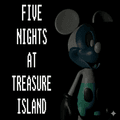
POPGOES is a FNAF fan series that earned official Fanverse support after building a strong identity within the community. Its games focus on custom lore, original animatronic designs, and a presentation that feels more considered than a simple fan-made experiment. The series stays connected to the wider FNAF universe while building its own setting, cast, conflicts, and rules. That choice gives the story room to move in a different direction while keeping the uneasy atmosphere associated with FNAF. The writing often places character motives alongside survival mechanics, so a strange message or room detail can matter beyond the current night. Some moments are direct, while others leave room for interpretation. That unevenness can make the lore feel more personal, even if not every detail receives a clear answer. POPGOES suits players who want horror with a story attached, especially those who enjoy checking notes, studying environments, and connecting small clues over time. It still includes pressure and danger, while asking you to care about what happened as you work to reach morning.
Gameplay Objective
Gameplay Objective
Each night, you must survive while piecing together the story through camera feeds, audio cues, office details, and changes in the environment. The immediate task is simple: watch the right areas, manage the systems you have, and respond before an animatronic reaches you.
The game hides much of its information inside ordinary play. A camera feed may show more than movement. An audio line can change how you understand a scene, while a small change in the office may foreshadow a later event. Later entries add mechanics, threats, and a broader story, which can make the nights harder to interpret while you learn the rules and sort through new clues.
POPGOES rewards attention to the lore as well as quick decisions. You can progress without memorizing every theory, but ignoring the surrounding details means missing much of what sets the series apart from a basic night-survival game. I found the balance strongest when each clue led back to an action. A sound should make you check something. A visual change should make you question what the game has already told you.
Controls
Controls follow the familiar point-and-click structure associated with classic FNAF games. You move between camera views, inspect locations, operate doors or related defenses, and use the tools provided for that specific title. The basic layout stays readable, which matters when several systems demand attention during a short window. POPGOES does not bury every action under a complicated interface. Most controls become clear through normal play, although later mechanics may require a few attempts before their timing feels natural. The interface supports the story focus because it leaves space for observation instead of filling the screen with unnecessary prompts. You still need to learn where each option sits, especially when an animatronic pattern changes and hesitation costs time. Players who prefer direct, mouse-driven horror will understand the structure quickly. Those expecting free movement through a large 3D environment may need to adjust their expectations. Here, the camera system and office routine create the pressure. Small interface sounds also matter, since a click or warning tone can become part of your decision-making rather than background noise.
FNAF Characters
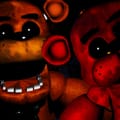
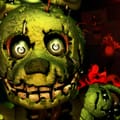
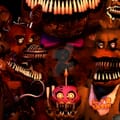
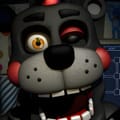
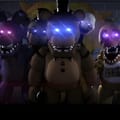
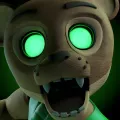
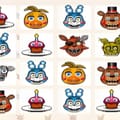
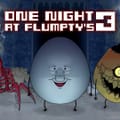
FNAF Characters in POPGOES use original designs with distinct silhouettes, behavior patterns, and personalities. The cast does not feel like a set of minor variations built around one familiar mascot. Each animatronic has a visual identity that helps you recognize it quickly, but appearance is only one part of the design. Their movement, timing, and role in the story give them separate weight. Some encounters feel threatening because of the mechanics involved, while others gain tension from what the character seems to know or represent. The series gives its cast enough personality to support conversations about motive and history, which helps the narrative avoid becoming a collection of unexplained jumpscares. That does not mean every character receives equal space. A few figures naturally stay in the foreground, while others work better as pieces of the wider mystery. Still, the animatronics remain memorable after the immediate scare has passed. Their designs can look playful at a glance, then become uncomfortable once the game places them in a quiet hallway or an empty room. That contrast fits the FNAF style without copying it too closely.
Sound And Visuals
Sound Effects and music carry much of the tension in POPGOES. A distant noise, a change in room tone, or a sudden mechanical sound can signal that an action has begun before the image confirms it. Music supports the narrative instead of serving as constant decoration. Quieter sections leave room for dialogue and environmental detail; urgent moments use sound to pull your attention toward what matters.
The visuals remain polished for a fan game series. Settings convey their history through layouts, props, lighting, and wear. They leave some things unexplained: a closed area, an altered display, or an object in the wrong room can make you look twice. Character models have their own visual language, and even the darker scenes usually retain enough detail to show you what you are seeing.
Some effects lean toward theatrical horror, while others stay restrained. The balance works because the games give each scene room to breathe instead of turning every moment into a loud scare. The strongest moments often arrive when the sound and image disagree slightly, leaving you unsure whether the danger has passed.
Strategy Tips
Strategy Tips begin with learning each character’s pattern before trying to move through a night on instinct. Watch how long an animatronic remains in one location, what sound announces its movement, and which action sends it away or buys time. Keep your attention on the camera system, but do not stare at one feed for too long if another threat can advance unseen. Resource use also matters in entries that limit power, tools, or response time. A safe action can become a bad habit if it consumes something you need later. Story clues deserve attention as well. Read messages, listen to recordings, and inspect changes in the environment when the game gives you a quiet moment. These details may explain a character’s behavior or affect how you understand a later night and its endings. You do not need to solve every piece of lore during the first playthrough. Make notes when a name, location, or repeated symbol appears. If a night feels impossible, slow down and identify the rule you are missing instead of reacting to every sound. POPGOES often rewards patience, but it still expects you to act quickly once the pattern becomes clear.
Final Thoughts
POPGOES remains a strong recommendation for FNAF fans who want a story-focused experience with original characters and its own mythology. The series keeps the familiar tension of cameras, limited reactions, and dangerous night shifts, then adds investigation through sound, visuals, and lore clues. Its best qualities appear when those parts work together: a character design hints at a role, a mechanic reinforces that role, and a later scene gives the earlier detail more meaning. Not every mystery needs a neat answer, and some players may prefer a more direct horror game with fewer narrative threads. For me, the extra material gives POPGOES its personality. It feels made by people who enjoy the FNAF format but also want room to tell a separate story. Official and community versions can be found primarily on Game Jolt, with availability depending on the individual release. Check the specific entry before starting, since the scope, mechanics, and amount of lore can vary across the series.