








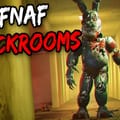
Fredbear and Friends: Left to Rot
Fredbear and Friends: Left to Rot is a multi-room point-and-click horror game created by Garrett McKay. You play as a father who enters the abandoned Fredbear's Family Diner while searching for his missing son. A private investigator stays in contact through the radio, offering directions and fragments of information as you move through the building. Every section adds a different task, threat, or control system, and the story eventually opens into multiple endings and a full custom night.
Fredbear and Friends: Left to Rot earns attention through its changing structure. The game does not keep you in one office for the entire night. Instead, it sends you through separate rooms with their own equipment, hazards, and rules. One area may ask you to monitor cameras, while another depends on timing, sound, or careful movement. The VHS-style training tapes also add useful story details and give the abandoned diner a worn, uncomfortable mood.
Gameplay Objective
Gameplay Objective is to move through the facility, survive the animatronics, and collect clues about your son and William Afton. Each room gives you a small piece of the larger situation, though the game leaves some details for you to connect. You must inspect the surroundings, follow the investigator’s radio instructions, and react when the building’s threats begin to change. Finishing the main route unlocks extra modes, additional endings, and challenges that test the systems introduced earlier.
Gameplay Objective changes whenever you reach a major area. The game repeatedly asks you to learn a new method of survival instead of relying on one familiar routine. That shift can feel demanding during the first attempt, especially when a death teaches you a rule only after the fact. Still, the variety gives the full playthrough a stronger pace. I found the room-to-room design more memorable than a long sequence of similar office sections.
Controls
Controls use a familiar point-and-click format built around cameras, lights, switches, and room-specific tools. The interface changes to match each location, but the basic interaction style remains easy to understand. You inspect objects, select equipment, and respond to threats through a compact set of actions. Some sections are more direct than others, so take a moment to identify what each screen allows you to do before the danger begins.
Controls reward close observation rather than fast clicking alone. The rules shift between sections, and a response that works in one room may waste time in another. Listen to the radio guidance, watch for small visual changes, and pay attention to sounds that signal movement nearby. Try to learn the purpose of every tool before using it under pressure. The game gives information through the environment, and ignoring a minor detail can lead to a quick restart.
FNAF Characters
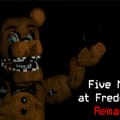
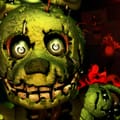
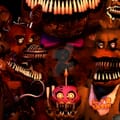
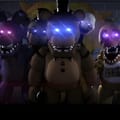
FNAF Characters include decayed and experimental versions of Fredbear, Spring Bonnie, and other early Fazbear designs. The roster also contains original creations such as the Suit and several security variants. Their appearances focus on broken materials, exposed machinery, and evidence of long-term neglect. These designs fit the setting because the characters look connected to a place where old costumes and dangerous experiments were left behind.
FNAF characters reflect the facility’s history as the story unfolds. Their damaged forms make more sense alongside the rooms, equipment, and records around them. Some encounters test your ability to survive, while others reveal what happened at the diner. As the building deteriorates, so do the characters, though the story leaves parts of their history open to interpretation. That uncertainty makes the encounters feel like more than simple monster appearances.
Sound and visuals
Sound Effects use radio static, machinery, distant movement, and rough environmental noise to make the facility feel isolated. Quiet sections can be just as uncomfortable as active attacks because the audio gives you time to listen for a change. The radio creates a thin connection to the outside world, but its interruptions and distorted signals also add pressure. Must-use audio cues include footsteps, mechanical shifts, and sounds that suggest an animatronic has entered a nearby area.
Visuals use a worn art style that communicates rot, dust, and abandonment without making every room look the same. The diner, underground areas, storage spaces, and security locations each have their own visual identity. Colors stay muted, while damaged surfaces and old equipment give the setting a believable history. The style is not polished in the way of a large commercial horror title, yet its rough edges suit the atmosphere. The result feels handmade and deliberately uncomfortable.
Strategy Tips
Strategy Tips begin with learning the rules of each room before trying to move quickly. The radio investigator often explains what to watch for, so listen carefully instead of skipping through the guidance. Check the available tools, note where threats appear, and remember what causes a failed attempt. This is a game where a few seconds spent understanding the room can save a much longer retry.
Strategy Tips for custom night and harder modes require stronger control of the tools introduced during the main story. Start by practicing one difficult section at a time, especially if the same area causes repeated deaths. Keep track of timing patterns and avoid changing several actions at once until you understand the result. Custom night encounters can feel harsh, but the main route provides enough information to build a workable routine. You could also replay earlier areas to improve your response speed before taking on the hardest settings.
Final Thoughts
Fredbear and Friends: Left to Rot is a multi-mechanic FNAF fan game with a strong sense of place, varied encounters, and an unusual room-based structure. Its best feature is the decision to give each section its own problem instead of stretching one office loop across the entire game. The atmosphere comes from the combination of damaged visuals, radio direction, and uneasy sound design. Some mechanics may take several attempts to understand, but that friction suits the game’s survival-horror approach. Players looking for a FNAF experience beyond a single office will find a substantial story, several endings, extra modes, and a custom night waiting after the main path.