Dayshift at Freddy’s Trilogy
Dayshift at Freddy’s is a comedy visual novel trilogy by DirectDogman. You work the day shift at Freddy Fazbender’s Pepperoni, dealing with odd coworkers, paperwork, questionable decisions, and problems that can turn absurd in seconds. Rather than hiding from animatronics at night, you spend your shifts talking to people and trying to keep the restaurant running.
The first game leans heavily into shitpost humor, but the trilogy grows into an emotionally heavy story with dozens of endings, returning characters, and lore that rewards close attention. Its tone can shift without warning, sometimes within the same scene.
Dayshift at Freddy’s puts conversation and choice at the center of the FNAF formula. You talk with employees, inspect locations, take or refuse jobs, and make decisions that can change entire story routes. Its absurd comedy often sits beside real tragedy, giving an early joke a different meaning when it returns later.
The trilogy consists of DSaF 1, DSaF 2, and DSaF 3. Play them in release order; starting out of sequence can spoil character development and weaken the impact of later scenes.
The goal is to finish your day shift by making dialogue and action choices that determine the ending. These games do not rely on traditional jumpscare survival. You are not managing a flashlight battery or waiting for an animatronic to leave a doorway. Success depends on the route you take, the information you notice, and the ending you reach. Some outcomes are silly, others bleak, and a few reveal details that change how earlier events appear.
Part of the gameplay involves finding story details hidden behind different choices. One conversation can open a new route, while another decision can close one without warning. Optional dialogue adds background about Dave Miller, the employees, and the wider FNAF setting shared by the trilogy. You can finish a game without seeing much of this material, so replay the entries, try different responses, and note unusual details to get a clearer picture of the lore. The later games become more serious and complicated, and they explain less directly.
Controls
Controls follow a familiar visual novel and RPG Maker format. Click to advance text, choose dialogue responses, inspect objects, and navigate simple maps or menus. The interface stays readable, leaving most of the screen for character portraits, text, and scene details. The games rarely interrupt conversations with demanding action sequences, so your attention stays on what the characters say and how your replies affect the story.
The controls require little mechanical skill. The game depends more on careful reading, remembering earlier conversations, and judging when a suspicious option may lead somewhere useful. A harmless-looking choice can send the story toward a very different ending. Save whenever the game allows it, especially before major conversations. Finding a bad route can be part of the fun, though. The trilogy rewards patience over quick reflexes, which fits its writing-heavy structure.
FNAF Characters
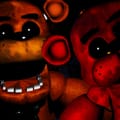
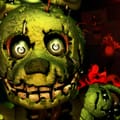
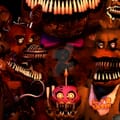
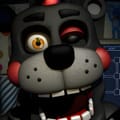
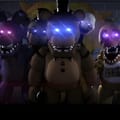
The trilogy’s FNAF characters include altered versions of the classic cast and original employees. Dave Miller, the Purple Guy, remains central, while his coworkers have their own motives, habits, and problems. The animatronics are more than threats waiting to deliver a scare; they join conversations, conflicts, jokes, and quieter personal moments. The writing makes room for absurd behavior as well as fear, regret, loyalty, and genuine kindness.
FNAF’s characters carry much of the trilogy’s emotional weight. Someone introduced as a punchline may later receive a backstory that changes how you read their actions. That shift does not happen for everyone; some characters remain deliberately strange or unpleasant. The unevenness makes the cast feel less polished and more human. Dave, the employees, and the animatronics form an ensemble that can be funny in one route and painful in another. The jokes still matter, but they do not erase the consequences of the characters’ choices.
Sound and visuals
Sound effects and music carry the games from comedy into drama. A brief musical cue can make an awkward exchange funnier, while quieter audio gives heavier scenes room to settle. Voice lines appear when they suit the presentation, adding personality to familiar characters. Small shifts in music, timing, and delivery can show that a scene has become more serious.
The visuals mix photographs, drawn elements, simple environments, and character-focused scenes. Their deliberately uneven style suits the trilogy’s satirical tone and rougher fan-game origins. Some images are funny because they are so blunt; others become more effective for the same reason. The visuals leave the text room to lead while framing jokes, clarifying locations, and giving major scenes a recognizable identity without elaborate animation.
Strategy tips
Explore thoroughly rather than focusing only on survival. Talk to everyone, inspect each available area, and try dialogue options that seem awkward or risky. You do not need to avoid every bad ending. A failed route can reveal a character detail, a piece of lore, or a joke that makes another ending easier to understand. Important conversations may appear in places that seem optional, so rushing toward the obvious objective can leave useful material behind.
Play the trilogy in release order, and watch for recurring names, objects, and themes. Keep notes if the timeline or relationships become hard to follow; later scenes assume you remember details the games do not always repeat. Save before major decisions when possible, then use separate files for different routes. DSaF 2 and DSaF 3 have more emotional impact after you have played through DSaF 1. The first game may have the comedy you prefer, while the later entries build on its groundwork.
Dayshift at Freddy’s Trilogy is for players who want a FNAF fan game centered on writing, choices, and unusual characters. It starts with crude jokes and chaotic situations before turning toward loss, guilt, friendship, and difficult decisions. The shift can feel abrupt, but that contrast gives the trilogy much of its personality. Its rough edges are part of the experience.
Dayshift at Freddy’s is a trilogy with a story that unfolds across its many routes and endings. Play the official versions on Game Jolt, starting with DSaF 1, and give the characters time to develop before judging the tone. The games can be funny, uncomfortable, and unexpectedly sincere. For anyone exploring FNAF fan works, the trilogy stands out as one of the community’s more distinctive long-form stories.