

















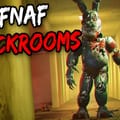
CASE: Animatronics
CASE: Animatronics turns the FNAF formula into a survival horror game where you move through the environment instead of staying in one room and monitoring cameras. You explore dark corridors, look for useful items, complete objectives, and listen for signs that an animatronic is nearby. Threats can come from different directions, so one memorized camera pattern will not help in every encounter.
Stealth is often your best option. You may have to hide, break the enemy’s line of sight, or take a different route before it reaches you. The game creates tension by limiting what you can see and hear: a noise behind a door, movement in a hallway, or an interrupted task can force you to decide quickly. Chases feel messy and unpredictable rather than like simple reaction tests. The game has also attracted major YouTubers, particularly with videos featuring its sudden scares and pursuit sequences.
CASE: Animatronics is a recognizable free-roam take on animatronic horror. It keeps the familiar FNAF-style threats but moves them out of the office and into rooms, corridors, and connected areas. You have space to move, though that space can work against you: a long hallway leaves you exposed, while a cramped side room might hide you or let you bypass danger. The goal is clear, but your route can change as soon as an animatronic begins searching. Some encounters depend on sound and atmosphere; others become brief chases. Players who prefer the tight control of office-based games may find this movement-heavy approach less satisfying. For those who want animatronic horror to unfold on foot, the game offers a different pace.
Gameplay Objective
The goal is to complete tasks or survive until the next part of the scenario while avoiding animatronics in a free-roam environment. You may need to find an object, open a new area, restore a system, or investigate a disturbance before you can move on.
These tasks force you to leave cover, creating most of the pressure. Hiding in one place may keep you safe briefly, but you cannot finish the level without moving. Before you step out, check the route nearby and listen for movement. A short crossing can become dangerous if an enemy enters the corridor from the other side.
As you explore, remember doors, corners, rooms, and alternate routes. Returning through a familiar area can feel very different once an enemy is active. The objective itself may be simple; reaching it is usually the hard part.
You usually do not need to search quickly. Moving carefully gives you more information, though waiting too long can leave you with fewer options.
Controls
The controls let you move freely, hide, and interact with the environment, so survival depends on both position and timing. Movement takes you through rooms and corridors, while interaction controls open doors, handle objects and switches, and activate other parts of the setting. Hiding can break an enemy’s search, but it only buys a few seconds. Leave at the wrong time and you may step straight into an animatronic’s path.
Unlike a stationary FNAF setup, you must turn, move, check your surroundings, and decide when to stop. Camera control matters too: a narrow view can leave a threat just outside the screen. Move carefully during tense sections. Running may save time, but it can drown out audio cues or lead you into a dead end. When an interaction prompt appears, use it quickly while keeping an eye on the area around you.
FNAF Characters
FNAF characters in CASE: Animatronics are built to pursue and ambush the player instead of following fixed camera routes. They can move through open areas, narrow hallways, and rooms connected to the main path, turning familiar spaces into changing threats. A harmless corridor can become dangerous once an enemy starts patrolling it, and a room may no longer feel safe after a chase passes through.
They do not need constant screen time to create pressure. Footsteps, movement sounds, and sudden appearances can keep you alert while you handle another objective. Some encounters reward patience; others force you out of cover and commit you to a route. Their behavior can feel less predictable than the camera-based patterns in classic FNAF games. That uncertainty adds tension, but it also means you may lose because you chose the wrong escape direction rather than missed a precise timing window.
Sound and visuals
Sound effects are critical when threats stay out of sight. Footsteps, machinery, environmental noise, and changes in nearby activity can tell you whether a route is becoming unsafe. Headphones help, but they cannot turn every noise into a clear warning. Some sounds are only part of the environment, so you have to judge distance and direction with incomplete information. That uncertainty suits the free-roam format.
Dark spaces, limited visibility, industrial details, and rooms that offer only partial safety keep the atmosphere tense. Lighting often gives you enough information to move forward without revealing the whole area. A doorway may look empty while a corner remains outside your view. CASE: Animatronics does not need constant visual spectacle to maintain pressure. A quiet corridor can create more tension than a loud scare when you know an animatronic may be nearby. The tension is uneven, though. Some areas build it well, while others depend more on sudden encounters.
Strategy Tips
In CASE: Animatronics, sound awareness, route planning, and controlled movement matter more than speed. Listen before crossing a hallway, especially after completing an objective or opening a new area. Learn how the rooms connect and which ones offer cover. A short route can leave you exposed with nowhere to turn.
Avoid lingering in open areas. Move with a purpose, then stop somewhere useful instead of in the middle of a corridor. If an animatronic spots you, do not automatically take the first doorway. Check whether it leads to a dead end, another exposed room, or a place where you can break line of sight. Hiding works best when you already know how you will leave.
You do not need to memorize every patrol, but remembering where an animatronic moved recently can help you choose a safer route. Keep your objectives in mind while exploring, and do not revisit rooms unless the game gives you a reason.
CASE: Animatronics offers free-roam horror instead of office-based survival. Its best moments come from moving through spaces while tracking uncertain enemy positions through sound. Some sections are rough, and the tension depends on whether you enjoy searching with a threat nearby. By replacing fixed cameras with exploration, it gives the FNAF-inspired formula a different structure. Check official storefronts and Game Jolt for current availability, system requirements, and version-specific details.