







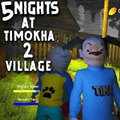

5 Nights at Timoha
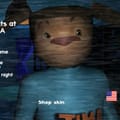
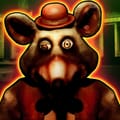
5 Nights at Timoha keeps the classic FNAF 1 formula while adding its own fan-made horror setting. Players must monitor cameras, predict enemy movements, close doors at the correct moment, manage limited power, and survive until 6 AM. The main challenge is not simply watching the screen. You must understand each warning, track Timoha’s changing position, and make fast decisions before the security office becomes unsafe. This is a survival horror game where every action matters, and one poor choice can end the night immediately.
Gameplay Mechanics
5 Nights at Timoha uses a gameplay structure modeled after Five Nights at Freddy's. During each night, you stay inside the security office and watch the building through a network of surveillance cameras. Your goal is to follow Timoha’s activities and prevent him from reaching your position. Timoha does not always move in a predictable pattern, so players must observe his behavior instead of relying on one repeated strategy. Try to balance camera checks, door control, lighting, and sound awareness while the night slowly becomes more dangerous.
Camera System
Surveillance cameras allow you to inspect different areas of the building and follow Timoha as he moves between rooms. The camera system helps you identify his current location, estimate how quickly he is approaching, and understand which direction he may take next. Other individuals may also appear across the building, making it important to check more than one area during a night. Cameras are your main source of information, but they are not completely reliable. Static interference can hide important details, and some feeds may temporarily stop working. You must predict enemy movements when the screen gives you incomplete information.
Camera interference becomes more important as the game progresses. A short loss of visual information can give Timoha enough time to reach a new area without being noticed. Players should remember his last known position and compare it with the available camera feeds. This method can help you estimate where he may appear next, especially when several screens become unclear at the same time. Must players avoid checking cameras without a clear purpose, because every second spent watching a feed may affect power usage and reaction time.
Power Management
Power management controls nearly every important action in 5 Nights at Timoha. Turning on lights, closing security doors, and accessing surveillance cameras all consume part of your limited energy supply. Power does not recover freely, so careless decisions can leave you defenseless before the night reaches 6 AM. You need to decide when a camera check is necessary and when it is safer to remain still and listen. This is a resource-management challenge as much as it is a horror experience. Efficient players use power only when it gives them useful information or protects them from an immediate attack.
Security doors must be closed at the correct moment when Timoha moves closer to the corridor. Closing a door too early can waste valuable energy, while waiting too long can allow him to reach the office entrance. Try to confirm his position before using the door, but do not delay when the danger becomes clear. The best timing depends on the distance between Timoha and the office, the current power level, and the information available from the cameras. A successful defense requires short, controlled actions rather than constant door usage.
Closed doors continue to drain power for as long as they remain active. Keeping both doors shut for an extended period can quickly reduce your remaining energy and create a more serious problem later in the night. Players should reopen a door when the threat has moved away, but they must first confirm that the corridor is safe. Power is depleted by defensive mistakes, and running out of energy usually removes your ability to use the cameras, lights, or doors. Once that happens, a jumpscare is practically guaranteed.
Jumpscares happen instantly when you close a door too late or allow Timoha to enter the security office. There is little time to recover after an enemy reaches the final approach point. The game rewards players who prepare before the threat becomes visible at the office entrance. Watch the cameras, listen for warning sounds, and use the doors only when the danger is close enough to justify the cost. A calm reaction is often more useful than a fast but careless one.
Positional Audio
Positional audio provides important clues when visual information is limited. Breathing, footsteps, dragging noises, and other environmental sounds can reveal that Timoha is nearby. These signals may help you determine whether he is approaching the corridor or moving through another part of the building. Sound does not always provide a complete answer, but it can confirm information from the cameras and warn you when a feed is affected by static. Listen carefully before spending power on another camera check.
Audio cues become especially important on nights when the cameras may be unavailable or unreliable. When a screen cannot show Timoha’s location, sound becomes your main method for judging his proximity. Players must identify the difference between distant movement and an immediate office threat. Try to combine breathing, footsteps, and dragging noises with the last camera position you remember. This approach can help you make a decision even when the building appears quiet and the screen provides no clear target.
Rising Difficulty
Difficulty increases every night, and each stage adds more pressure to the survival routine. Night 1 introduces the basic pattern, while later nights demand stronger memory, better timing, and more efficient power use.
Night 1: Timoha is relatively simple to track and moves at a slow pace. This first night gives players time to learn the camera layout, understand the door system, and recognize the basic sound signals.
Nights 2–3: Camera interference becomes more common, and Timoha’s movement speed increases. Players must check feeds more carefully while preparing for shorter reaction windows. Random interruptions make it harder to depend on visual information alone.
Nights 4–5: Timoha becomes highly aggressive, attacks faster, and moves in a more irregular way. His behavior makes repeated patterns less reliable, so you must adapt to each situation instead of following one fixed routine. Power control and accurate audio reading become essential for reaching 6 AM.
Stress and Jumpscares
Stress and jumpscares shape the atmosphere of 5 Nights at Timoha. Eerie sounds, dark lighting, sudden camera problems, and unpredictable movement create tension throughout every shift. The increasing pace can make players close doors too early, waste power, or miss an important audio warning. Maintain composure and follow a clear checking routine as the night becomes more intense. This is a game of timing and attention, not panic. Could you stay calm long enough to survive all five nights?
I wish you luck!
Join another scary nights in FNAF Plus !